Embarking on the journey of home fermentation can unlock a world of unique flavors and powerful health benefits. Among the most intriguing fermented foods is natto, a traditional Japanese superfood renowned for its distinctive taste, sticky texture, and incredible nutritional profile. While its preparation might seem daunting, using a modern yogurt maker simplifies the process, making authentic homemade natto accessible to everyone. This comprehensive guide will walk you through every step, ensuring you achieve perfect, stringy, and nutrient-rich natto right in your kitchen.
Why Make Natto at Home? Exploring its Health Benefits
Natto is far more than just fermented soybeans; it’s a nutritional powerhouse. Its distinctive stickiness is a result of poly-gamma-glutamic acid, while its rich health benefits stem from the Bacillus subtilis natto bacteria. This fermentation process creates nattokinase, an enzyme known for supporting cardiovascular health by helping to dissolve blood clots. Beyond nattokinase, natto is an exceptional source of Vitamin K2, vital for bone health and proper calcium utilization, alongside probiotics that boost gut health, and complete plant-based protein. Making natto at home allows you to enjoy these benefits fresh, often surpassing the quality and potency of store-bought versions.
Essential Equipment and Ingredients for Homemade Natto
Successful natto fermentation begins with selecting the right tools and high-quality ingredients. A few key items will transform your kitchen into a natto-making haven.
Choosing Your Soybeans
|
Our Picks for the Best Yogurt maker in 2026
As an Amazon Associate I earn from qualifying purchases.
|
||
| Num | Product | Action |
|---|---|---|
| 1 | Euro Cuisine YM80 Electric Yogurt Maker Machine- Promote Gut Health with Probiotic Rich Homemade Yogurt -Home Yogurt Incubator with Glass Jars, White |

|
| 2 | Yogurt Maker Machine, 8 Glass Jars with Lids Reusable for Yoghurt, Oatmeal, Pudding, or Jello, Food-Grade Martial, One-touch Control, Homemade Yogurt |
|
| 3 | GDOR Yogurt Maker with Adjustable Temp & Timer– Probiotic-Rich – Digital Greek Yogurt Machine with 8×6oz BPA-Free Glass Jars, Easy to Use for Home, Stainless Steel |
|
| 4 | Ultimate Probiotic Yogurt Maker with Adjustable Time & Temp Control - Make Trillions of Live Probiotics with Two 1-Quart Containers for Larger Batches - Greek Yogurt Maker - ULTIMATE LIFETIME WARRANTY |
|
| 5 | Easy Yogurt Maker for Perfect Homemade Yogurt, 1.7 QT Electric Fermenter for Greek Yogurt, Rice Wine, Natto, with Digital Control & Auto Keep Warm, BPA-Free Container |
|
| 6 | Euro Cuisine Yogurt Maker - YMX650 Automatic Digital Yogurt Maker Machine with Set Temperature - Includes 7-6 oz. Reusable Glass Jars and 7 Rotary Date Setting Lids for Instant Storage |
|
| 7 | Yogurt Dehydrator, Small-Batch Greek Yogurt Maker with Built-In Date Reminder Fresh, Simple & Just the Right Amount — Food-Grade BPA-Free Materials |
|
| 8 | Yogurt Maker, Compact Greek Yogurt Maker Machine with Constant Temperature Control, Stainless Steel Container, 1 Quart for Home Organic Yogurt |
|
| 9 | Yogurt Maker with Adjustable Temperature & Time Control, Probiotic Yogurt Maker Machine with 8 Glass Jars, Automatic Shut-Off for Homemade Probiotic Yogurt, Promoting Gut Health(48OZ) |
|
| 10 | Yogurt Maker with Two Containers, Yogurt Maker Machine with Adjustable Temperature & Time Control, Automatic Shut-Off & Constant Temper for Homemade Probiotic Yogurt, Promoting Gut Health |
|
While you can use various soybean types, traditional natto often features smaller varieties. These smaller beans, such as Suzumaru or Tachinagaha, are prized for their ideal texture and even fermentation. However, any organic, non-GMO soybeans will work effectively. The key is to ensure they are thoroughly cooked until very tender, as this softness is crucial for the Bacillus subtilis natto to properly colonize and ferment the beans.
The Mighty Natto Starter Culture (Bacillus subtilis natto)
The heart of natto fermentation lies in the Bacillus subtilis natto starter culture. This specific bacterium is responsible for transforming cooked soybeans into the sticky, flavorful natto. You can typically find this culture in powdered form online from specialty fermentation suppliers. Alternatively, a small amount of fresh, store-bought natto (ensure it’s not pasteurized, as pasteurization kills the active bacteria) can serve as a starter. When using powdered culture, follow the manufacturer’s instructions for the correct ratio to your soybeans.
Your Yogurt Maker: The Fermentation Powerhouse
A yogurt maker is an ideal incubation environment for natto due to its ability to maintain a consistent, warm temperature. Look for a model that offers:
- Adjustable Temperature Control: Natto thrives within a specific range, typically 40-45°C (104-113°F).
- A 24-Hour Timer: Fermentation usually takes around 24 hours, so a timer that can accommodate this duration is essential.
- Ventilation Capabilities: Natto bacteria are aerobic, meaning they require oxygen. The fermentation container inside the yogurt maker should not be sealed airtight. Many yogurt makers have ventilated lids, or you can loosely cover your bean container with plastic wrap with poked holes, or a breathable cloth. Some models allow adding a shallow layer of water to the base to help with humidity and heat distribution.
Other Key Tools
Beyond your yogurt maker, you’ll need:
- Sterilized Containers: Glass jars or shallow, food-grade containers (e.g., glass or stainless steel) are perfect for holding the beans during fermentation. Sterilization is critical to prevent contamination from unwanted bacteria.
- Pressure Cooker or Large Pot: For cooking the soybeans until they are incredibly soft.
- Thermometer: To ensure the beans are at the correct temperature when inoculating with the starter culture.
- Sterilized Spoons/Utensils: For mixing and handling the beans.
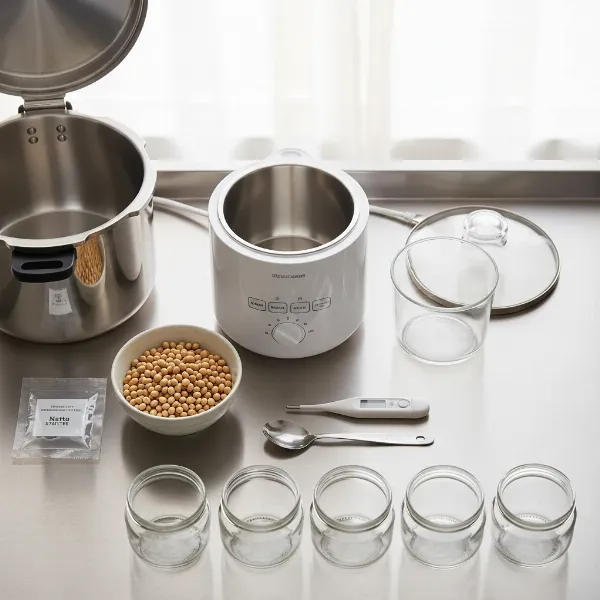 Essential equipment and ingredients for homemade natto, including soybeans, starter, and yogurt maker.
Step-by-Step Guide: Making Natto in Your Yogurt Maker
With your equipment and ingredients ready, let’s dive into the fascinating process of making natto.
Preparing the Soybeans: Soaking and Cooking
The journey to perfect natto begins with properly prepared soybeans. First, rinse your dried soybeans thoroughly. Then, soak them in plenty of water for at least 10-14 hours, ideally overnight. Soaking helps the beans hydrate fully and ensures even cooking.
After soaking, drain and rinse the beans again. The next crucial step is cooking. Cook the soybeans until they are exceptionally tender – soft enough to be easily crushed between your fingers. This can be achieved in a pressure cooker (typically 30-45 minutes on high pressure) or a large pot on the stovetop (which can take 2-3 hours). Undercooked beans will not ferment properly.
Sterilization is Key
Maintaining a sterile environment is paramount to successfully fermenting natto and preventing the growth of undesirable bacteria. All equipment that will come into contact with the cooked beans and starter culture – including your fermentation containers, spoons, and any mixing bowls – must be thoroughly sterilized. You can do this by boiling them in water for 10-15 minutes or washing them in a dishwasher on a hot sanitize cycle. Allow them to air dry or dry with a clean, unused paper towel.
Inoculating the Beans
Once your soybeans are cooked and still hot (around 40-45°C or 104-113°F is ideal), it’s time to introduce the natto starter culture. If using powdered starter, dissolve it in a small amount of warm, sterilized water according to the package directions. If using existing natto, mash a small portion and mix it with a tiny amount of warm water to create a slurry.
Pour the dissolved starter culture or natto slurry over the hot, cooked soybeans. Mix thoroughly but gently with a sterilized spoon to ensure even distribution of the Bacillus subtilis natto. The warmth of the beans is important as it helps activate the bacteria and prevents the temperature from dropping too low.
Incubation in the Yogurt Maker
Transfer the inoculated soybeans into your sterilized fermentation containers. It’s best to spread the beans in a relatively thin layer (no more than 1-2 inches deep) to maximize surface area contact with oxygen, which the natto bacteria needs.
Place the containers into your yogurt maker. If your yogurt maker has a water bath feature, you might add a small amount of water to the base to help maintain humidity and even heat. Set your yogurt maker’s temperature to 40-45°C (104-113°F) and the timer for 24 hours.
Crucially, do not seal the fermentation containers airtight. The Bacillus subtilis natto is aerobic and needs oxygen to thrive. Loosely cover the containers with their own lids (if they have ventilation holes), or use plastic wrap poked with several small holes, or a clean, breathable cloth secured with a rubber band. Then, place the main lid of the yogurt maker on, ensuring any built-in vents are open.
Post-Fermentation: Cooling and Maturation
After 24 hours, your natto should be ready. You’ll typically observe a whitish, splotchy layer on the beans, and a distinct, somewhat pungent aroma (often described as earthy or even a bit like aged cheese). A key indicator of successful fermentation is the “neba-neba” – the characteristic sticky, stringy strands that form when you stir the beans.
Carefully remove the containers from the yogurt maker, being mindful of any condensation. If a strong ammonia smell is present, it might indicate slight over-fermentation, but this often dissipates during maturation.
Place a tight-fitting lid on your containers and transfer the freshly fermented natto to the refrigerator. This “maturation” or “second fermentation” phase is essential for developing its full flavor and reducing any initial strong odors. Refrigerate for at least 24 hours, and ideally 1-3 days, for the best taste and texture.
 Freshly fermented homemade natto in a glass container, showing characteristic sticky, stringy texture.
Troubleshooting Common Natto-Making Challenges
Even with careful preparation, home fermentation can sometimes present challenges. Here’s how to address common issues:
No Strings Attached? (Weak Fermentation)
If your natto lacks the signature sticky strings, several factors could be at play:
- Temperature Too Low: The Bacillus subtilis natto requires consistent warmth. Ensure your yogurt maker maintained the optimal 40-45°C throughout the 24-hour cycle.
- Inactive Culture: Your starter culture might be old or compromised. Always use fresh, viable starter.
- Undercooked Beans: Beans that aren’t tender enough won’t ferment properly. They need to be very soft.
- Lack of Oxygen: Ensure there was adequate ventilation during incubation; airtight containers will hinder fermentation.
“Many beginners struggle with natto’s stickiness at first, but patience and precise temperature control are your best allies. If you don’t see strings, first check your incubator’s thermometer and the freshness of your starter.” – Dr. Akihiro Tanaka, Fermentation Scientist
The Ammonia Aroma
A strong, unpleasant ammonia smell can be off-putting. This usually indicates:
- Over-Fermentation: Fermenting for too long can lead to an accumulation of ammonia. Try shortening the fermentation time by a few hours in your next batch.
- Poor Ventilation: Insufficient oxygen can contribute to off-flavors. Make sure your containers are loosely covered to allow air exchange.
While some ammonia smell can be normal immediately after fermentation, it should subside after refrigeration. If it’s overpowering, it might be best to adjust your next batch.
Unwanted Guests (Contamination)
Any unusual colors (e.g., green, black, or fuzzy mold) indicate contamination. This almost always points to insufficient sterilization of your equipment. Always sterilize all tools and containers meticulously before use. If you see signs of contamination, discard the batch and thoroughly clean your equipment before attempting another.
Enjoying Your Homemade Natto
Once your natto has matured in the refrigerator for a day or two, it’s ready to enjoy! Serve it traditionally over warm rice, often with a dash of soy sauce, karashi (Japanese mustard), and chopped green onions. The sticky strands are best developed by stirring vigorously for a minute or two before serving.
Natto is surprisingly versatile; you can add it to omelets, mix it into salads, or even incorporate it into pasta dishes. Store your homemade natto in airtight containers in the refrigerator for up to a week. For longer storage, you can freeze individual portions for several months, though some argue freezing may slightly diminish its beneficial enzymes.
Conclusion
Making natto at home using a yogurt maker is a rewarding culinary adventure that brings a unique, nutritious superfood to your table. From selecting the right soybeans and activating the potent Bacillus subtilis natto culture to maintaining the perfect fermentation conditions, each step contributes to the distinct flavor and texture of this traditional Japanese delicacy. With careful attention to detail and a little patience, your yogurt maker will become an indispensable tool in crafting delicious, probiotic-rich natto that truly elevates your home cooking.
Why wait to experience the incredible health benefits and distinctive taste of fresh, homemade natto?
Frequently Asked Questions
What’s the ideal temperature for natto fermentation?
The ideal temperature range for natto fermentation is between 40°C and 45°C (104°F to 113°F). Maintaining this consistent warmth is crucial for the Bacillus subtilis natto bacteria to thrive and properly ferment the soybeans, ensuring the development of its characteristic stickiness and flavor.
How long does natto fermentation take?
Natto fermentation typically takes around 24 hours in a yogurt maker. However, some sources suggest a range of 18 to 24 hours. After the initial fermentation, it’s essential to refrigerate the natto for at least 24 hours, and ideally 1-3 days, for it to mature, allowing its flavors to deepen and any strong initial aromas to mellow.
Can I reuse some homemade natto as a starter?
Yes, you can use a small portion of your successfully fermented homemade natto as a starter for a new batch, a process known as “backslopping.” This can be done a few times before the culture might weaken, making it advisable to refresh with a new powdered starter eventually. Ensure the natto used as a starter is vibrant and fresh.
Why does my natto smell like ammonia?
A strong ammonia smell often indicates that your natto has over-fermented or lacked sufficient ventilation during the incubation period. While a mild, earthy aroma is normal, an overpowering ammonia scent suggests the fermentation process went on too long. Try reducing the fermentation time slightly or ensuring better air circulation in your next batch.
What kind of soybeans should I use for natto?
While any organic, non-GMO soybeans can be used, smaller soybean varieties like Suzumaru or Tachinagaha are traditionally preferred for making natto. Their size contributes to a better texture and more even fermentation. The most important factor is to ensure the soybeans are cooked until exceptionally tender before inoculation.