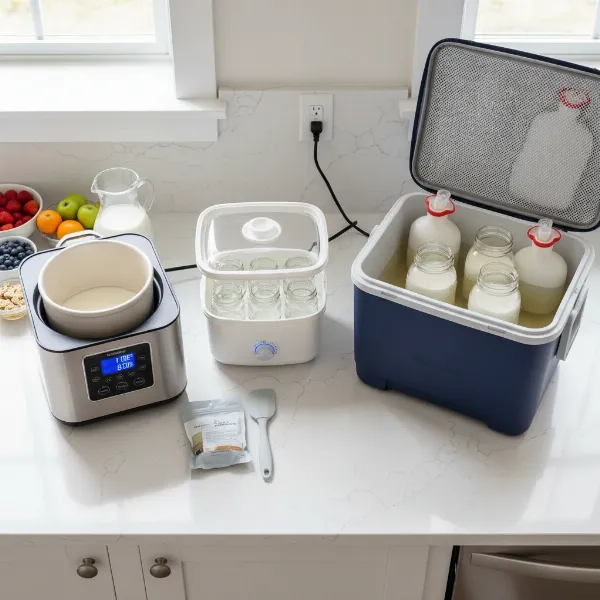
Embarking on the journey of homemade yogurt opens up a world of creamy, probiotic-rich goodness. But before you dive in, a fundamental decision awaits: what will you use to kickstart your fermentation? The choice between using a dedicated heirloom yogurt starter and simply a spoonful of store-bought yogurt isn’t just about convenience; it shapes the flavor, texture, and longevity of your homemade creation. Understanding the nuances of each can empower you to cultivate the perfect batch that aligns with your culinary goals and lifestyle.
Understanding Your Yogurt Starter: The Foundation of Fermentation
At its core, yogurt is fermented milk, transformed by beneficial bacteria. These microscopic workers consume the lactose in milk and convert it into lactic acid, which thickens the milk and gives yogurt its characteristic tangy flavor. The “starter” is simply the source of these crucial bacteria. Without them, milk would simply spoil, not magically become yogurt.
The world of yogurt starters broadly divides into two main categories: heirloom cultures, which are designed for indefinite reuse, and store-bought yogurt, often used as a direct-set or limited-reuse starter. While both achieve the goal of making yogurt, their underlying bacterial compositions and long-term performance differ significantly, impacting everything from your yogurt’s consistency to its probiotic diversity.
Deep Dive into Heirloom Yogurt Starters
Heirloom yogurt cultures are a testament to culinary tradition, passed down through generations. These living cultures are characterized by their ability to be re-cultured indefinitely, allowing you to create batch after batch of homemade yogurt using a portion of your previous creation. This perpetual cycle makes them a sustainable and deeply rewarding choice for dedicated yogurt makers.
Defining Heirloom Cultures: A Living Legacy
|
Our Picks for the Best Yogurt maker in 2026
As an Amazon Associate I earn from qualifying purchases.
|
||
| Num | Product | Action |
|---|---|---|
| 1 | Euro Cuisine YM80 Electric Yogurt Maker Machine- Promote Gut Health with Probiotic Rich Homemade Yogurt -Home Yogurt Incubator with Glass Jars, White |

|
| 2 | Yogurt Maker Machine, 8 Glass Jars with Lids Reusable for Yoghurt, Oatmeal, Pudding, or Jello, Food-Grade Martial, One-touch Control, Homemade Yogurt |
|
| 3 | Euro Cuisine Yogurt Maker - YMX650 Automatic Digital Yogurt Maker Machine with Set Temperature - Includes 7-6 oz. Reusable Glass Jars and 7 Rotary Date Setting Lids for Instant Storage |
|
| 4 | Yogurt Dehydrator, Small-Batch Greek Yogurt Maker with Built-In Date Reminder Fresh, Simple & Just the Right Amount — Food-Grade BPA-Free Materials |
|
| 5 | Ultimate Probiotic Yogurt Maker with Adjustable Time & Temp Control - Make Trillions of Live Probiotics with Two 1-Quart Containers for Larger Batches - Greek Yogurt Maker - ULTIMATE LIFETIME WARRANTY |
|
| 6 | GDOR Yogurt Maker with Adjustable Temp & Timer– Probiotic-Rich – Digital Greek Yogurt Machine with 8×6oz BPA-Free Glass Jars, Easy to Use for Home, Stainless Steel |
|
| 7 | Yogurt Maker with Adjustable Temperature & Time Control, Probiotic Yogurt Maker Machine with 8 Glass Jars, Automatic Shut-Off for Homemade Probiotic Yogurt, Promoting Gut Health(48OZ) |
|
| 8 | Yogurt Maker with Two Containers, Yogurt Maker Machine with Adjustable Temperature & Time Control, Automatic Shut-Off & Constant Temper for Homemade Probiotic Yogurt, Promoting Gut Health |
|
| 9 | Easy Yogurt Maker for Perfect Homemade Yogurt, 1.7 QT Electric Fermenter for Greek Yogurt, Rice Wine, Natto, with Digital Control & Auto Keep Warm, BPA-Free Container |
|
| 10 | Yogurt Maker, Compact Greek Yogurt Maker Machine with Constant Temperature Control, Stainless Steel Container, 1 Quart for Home Organic Yogurt |
|
Unlike commercial strains often isolated and optimized for industrial production, heirloom cultures typically possess a more diverse community of bacteria. This rich microbial tapestry contributes to their stability and unique characteristics, ensuring consistent results over countless generations, provided they are cared for properly. They are truly a “living legacy,” carrying unique flavor profiles and textures that have been cherished for centuries.
Types of Heirloom Cultures
Heirloom cultures come in two primary types, distinguished by their preferred fermentation temperatures:
- Mesophilic Cultures: These “medium-loving” bacteria thrive at room temperature (typically 70-77°F or 21-25°C), requiring no special heating equipment. Popular mesophilic varieties include Viili, known for its mild, ropey texture, Matsoni (Georgian yogurt) which is creamy and mildly tart, and Filmjölk from Sweden. They offer simplicity, often allowing you to simply mix the starter with milk and let it sit on your countertop.
- Thermophilic Cultures: These “heat-loving” bacteria require warmer temperatures (105-115°F or 40-46°C) to ferment successfully, similar to most commercial yogurts. Examples include traditional Bulgarian and Greek heirloom cultures, which produce thicker, tangier yogurts. These often benefit from a yogurt maker or a controlled warm environment like an Instant Pot.
Pros of Heirloom Starters: Infinite Reusability, Diversity, Unique Flavors
The most significant advantage of heirloom cultures is their indefinite reusability. Once activated, you only need to reserve a small amount from each batch to start the next, making them incredibly cost-effective over time. This self-perpetuating nature fosters a sense of self-sufficiency in the kitchen.
Heirloom cultures often boast greater microbial diversity compared to many commercial starters. This broader spectrum of beneficial bacteria can potentially offer a wider range of probiotic benefits and contribute to unique, complex flavor profiles not found in store-bought options. Their distinct characteristics lead to unique flavors and textures, from the mild and buttery notes of Matsoni to the thicker, tangy robustness of Bulgarian yogurt, allowing for a personalized culinary experience.
Cons of Heirloom Starters: Initial Investment, Maintenance, Learning Curve
The primary drawback is the initial investment for purchasing the starter culture, which can be more expensive than a single tub of store-bought yogurt. Furthermore, heirloom cultures require regular maintenance. They need to be re-cultured at least once every seven days to maintain their vigor; otherwise, they may weaken or become contaminated. Taking breaks longer than a week requires special preservation methods like freezing or drying, which can sometimes be finicky. There’s also a learning curve associated with understanding how each specific heirloom culture behaves, especially concerning optimal temperatures and handling techniques to ensure consistent results.
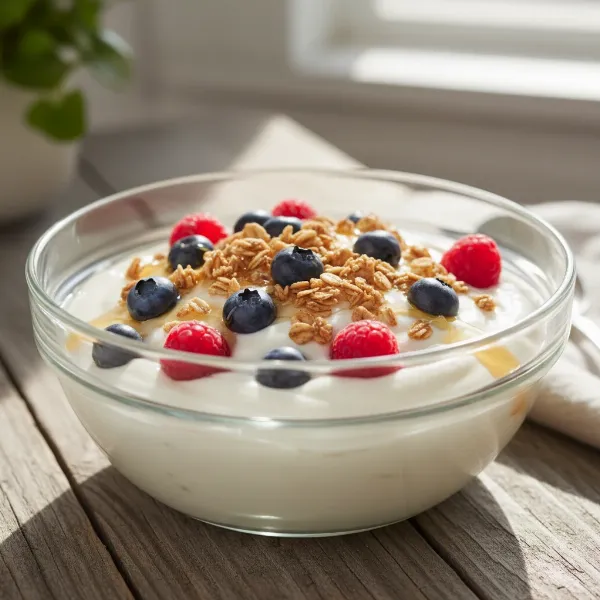 A vibrant bowl of thick, creamy homemade heirloom yogurt, garnished with fresh berries and granola, showcasing its rich texture and natural appeal.
Exploring Store-Bought Yogurt as a Starter
Using store-bought yogurt as a starter is often the first step for many home yogurt makers due to its widespread availability and apparent simplicity. This method involves using a small amount of plain yogurt with live and active cultures to inoculate a new batch of milk.
Defining Store-Bought Starters: Convenience in a Cup
When you pick up a container of plain yogurt from the grocery store, you’re looking for one explicitly labeled with “live and active cultures.” These cultures are the bacteria necessary to ferment your milk. Most commercial yogurts are thermophilic, meaning they require a warm environment to ferment. The convenience factor is undeniable: it’s readily available and requires no special ordering.
Why Store-Bought Cultures Have Limitations
While convenient, store-bought yogurt often comes with limitations when used as a starter. Commercial cultures are typically developed for consistency and mass production, not for indefinite re-culturing in a home environment. This means they often contain a more limited selection of bacterial strains that may struggle to maintain their balance over multiple generations. As a result, using store-bought yogurt as a starter usually leads to a phenomenon known as “culture drift,” where the yogurt’s texture or flavor changes, or the culture simply weakens and fails to set new batches after a few cycles.
Pros of Store-Bought Starters: Accessibility, Immediate Results, No Long-Term Commitment
The main advantage is accessibility. Store-bought yogurt is available in virtually any grocery store, making it the easiest and quickest way to start making homemade yogurt. It offers immediate results for a batch or two, providing a familiar taste and texture, especially if you enjoy the specific brand you’re using. There’s also no long-term commitment to maintaining a culture, which suits those who make yogurt infrequently or prefer less hands-on involvement.
Cons of Store-Bought Starters: Limited Reusability, Culture Drift, Potential Additives
The most significant drawback is limited reusability. Most store-bought yogurts can only be successfully re-cultured for 2-6 generations before the culture weakens, leading to inconsistent results or failure to set. This means frequent repurchasing of new starter yogurt, reducing long-term cost savings. The issue of culture drift means that with each successive batch, the balance of bacteria may shift, altering the flavor and texture. Furthermore, many commercial yogurts contain additives like thickeners, stabilizers, or sugars, even in plain varieties, which can interfere with the fermentation process and alter your homemade yogurt’s natural consistency.
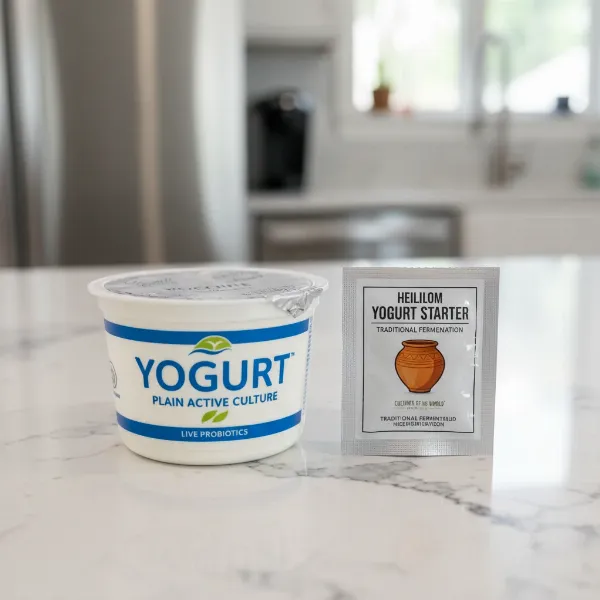 A side-by-side comparison of a small container of store-bought plain yogurt next to a packet of powdered heirloom yogurt starter.
Heirloom vs. Store-Bought: A Comparative Analysis
When deciding between heirloom and store-bought starters, several key aspects come into play, influencing the outcome and experience of your homemade yogurt.
Probiotic Diversity and Gut Health
Heirloom cultures are often celebrated for their rich and diverse microbial populations. Many heirloom varieties contain a broader spectrum of bacterial strains that work synergistically, potentially offering more varied probiotic benefits for gut health. Commercial starters, while providing beneficial probiotics, often have a more limited, lab-selected range of strains, optimized for consistency rather than maximum diversity.
Flavor, Texture, and Consistency
The flavor and texture profiles can vary significantly. Heirloom yogurts are known for their unique, often complex flavors and distinct textures (from thin and drinkable to thick and ropey), which become consistent over generations within their specific culture type. Store-bought starters tend to produce yogurt with a more familiar, often tangier, and thicker consistency (if strained), similar to the original commercial product, but this consistency can degrade over subsequent batches.
Reusability and Sustainability
This is where heirlooms truly shine. Heirloom cultures are infinitely reusable, making them a highly sustainable and environmentally friendly option. You acquire the starter once and perpetuate it, reducing waste and reliance on store purchases. Store-bought yogurts, conversely, are limited in their reusability, typically only lasting a few generations before requiring a fresh store-bought starter. This leads to more frequent purchases and less sustainability in the long run.
Effort, Convenience, and Equipment Needs
The effort and convenience vary. Mesophilic heirloom cultures offer high convenience for fermentation at room temperature, often needing minimal equipment beyond a jar and milk. Thermophilic heirlooms and store-bought starters require a consistent warm temperature, often necessitating a yogurt maker, Instant Pot, or a similar heating setup. While store-bought is convenient to acquire, the repeated need to buy new starter can be less convenient than maintaining a perpetual heirloom culture.
Cost-Effectiveness Over Time
Initial costs favor store-bought yogurt, which is inexpensive for a single purchase. However, over time, heirloom cultures become far more cost-effective. After the initial purchase, they provide virtually free yogurt indefinitely. The repeated purchase of store-bought yogurt for new batches quickly adds up, making it more expensive in the long run.
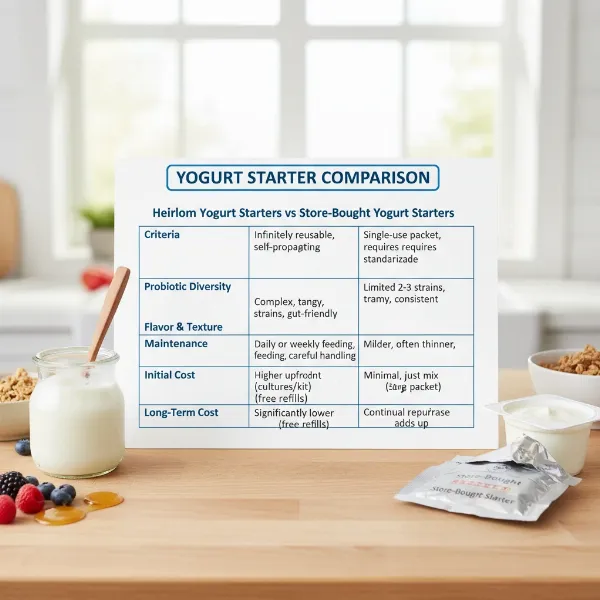 A clean, organized table visually comparing heirloom and store-bought yogurt starters across key criteria like reusability, probiotic diversity, and cost.
Choosing Your Champion: Which Starter is Right for Your Kitchen?
The “better” starter ultimately depends on your priorities, lifestyle, and passion for making homemade yogurt. Both offer pathways to delicious, homemade goodness, but cater to different needs.
You Might Prefer Heirloom If…
- You are committed to making yogurt regularly and enjoy a hands-on approach.
- You prioritize long-term cost savings and sustainability.
- You are interested in exploring unique flavors and textures beyond typical commercial yogurts.
- You seek a diverse range of probiotics and want full control over your ingredients, avoiding additives.
- You appreciate the tradition and self-sufficiency of maintaining a living culture.
You Might Prefer Store-Bought If…
- You are new to homemade yogurt and want a low-commitment, easy entry point.
- You only make yogurt occasionally and don’t want the responsibility of maintaining a continuous culture.
- You prefer the familiar taste and texture of commercial yogurts.
- Convenience and immediate accessibility from a local grocery store are your top priorities.
- The idea of culture drift after a few batches doesn’t deter you from simply buying a new starter.
Mastering Homemade Yogurt: Tips for Success
Regardless of the starter you choose, a few universal principles will help ensure your homemade yogurt is consistently delicious and safe.
Hygiene is Paramount
The golden rule of fermentation: cleanliness is crucial. All equipment that comes into contact with your milk and starter – pots, spoons, jars – must be meticulously clean and ideally sanitized. This minimizes the risk of introducing unwanted bacteria that could spoil your yogurt or interfere with your starter culture. Sterilizing jars and utensils in boiling water or a sanitizing solution is a simple yet effective practice.
Milk Quality Matters
The type of milk you use profoundly impacts your yogurt’s final texture and flavor. Whole milk generally yields a thicker, creamier yogurt, while skim milk will produce a thinner result. Ultra-pasteurized (UHT) milk can sometimes struggle to set as firmly, so traditional pasteurized milk is often preferred. Experiment with different types of dairy or non-dairy milks (like soy, almond, or coconut) to find your favorite.
Temperature Control (for Thermophilic Cultures)
For thermophilic cultures (both heirloom and store-bought), maintaining a consistent temperature throughout the fermentation period is critical. Fluctuations can stress the bacteria, leading to a runny or improperly set yogurt. A reliable yogurt maker, an Instant Pot with a yogurt function, a slow cooker on a low setting, or even an oven with just the light on can provide the stable warmth needed for these cultures to thrive. Mesophilic cultures, of course, remove this concern by fermenting happily at room temperature.
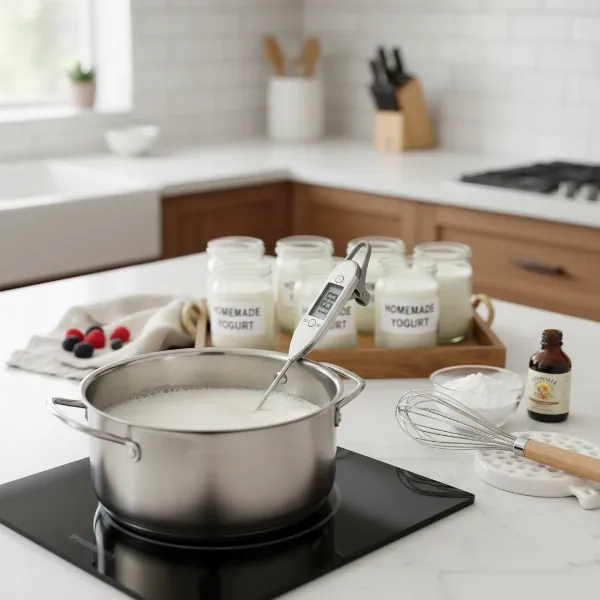 A well-lit kitchen scene showing various tools for making homemade yogurt: a thermometer, a whisk, milk in a saucepan, and several jars of finished yogurt.
Conclusion
The debate between heirloom starters and store-bought yogurt for making homemade yogurt boils down to a balance of convenience, commitment, and culinary adventure. Heirloom cultures offer an endlessly reusable, diverse, and deeply rewarding experience, connecting you to a long tradition of fermentation and providing unique flavor profiles. They are an investment in time and initial cost, but offer unparalleled long-term value and sustainability. Store-bought yogurt, on the other hand, provides an easy, accessible entry point into homemade yogurt, perfect for occasional use without the commitment of maintaining a continuous culture, though with limitations on reusability and bacterial diversity.
Ultimately, the best choice is the one that fits your kitchen and your lifestyle. Why not try both and discover your own favorite path to delicious, fresh homemade yogurt?
Frequently Asked Questions
How many times can you reuse store-bought yogurt as a starter?
You can typically reuse store-bought yogurt as a starter for about 2 to 6 generations before the culture weakens and the yogurt’s texture or ability to set reliably declines. This is due to the limited diversity of bacterial strains in commercial products, which are not designed for indefinite re-culturing.
Are heirloom yogurt cultures safe?
Yes, heirloom yogurt cultures are generally very safe when properly cared for and used with good hygiene practices. They have been sustained for generations, proving their stability. Proper sanitation of equipment and fresh milk are key to preventing contamination and ensuring safety.
What’s the difference between mesophilic and thermophilic cultures?
Mesophilic cultures ferment at room temperature (around 70-77°F or 21-25°C), requiring no external heat. Thermophilic cultures are “heat-loving” and require warmer temperatures (105-115°F or 40-46°C) for fermentation, often needing a yogurt maker or similar heated environment.
Can I freeze heirloom yogurt starter?
Yes, many heirloom yogurt cultures can be frozen or dried to preserve them for longer breaks between batches. This method helps put the culture “on hold,” though it’s not always 100% foolproof and may require a few activation batches to regain full vigor.
Does homemade yogurt have more probiotics than store-bought?
Homemade yogurt, especially when made with a diverse heirloom starter, can potentially contain a higher concentration and a wider variety of live and active probiotic bacteria than many store-bought options. This is because commercial yogurts can undergo processing that may reduce live culture counts, and heirloom cultures often have a naturally richer microbial composition.