Welcome to the heart of homemade yogurt! If you’ve ever stood in your kitchen, milk carton in hand, wondering why your last batch was too tart, too thin, or just not quite right, you’ve come to the right place. The secret often lies not in the machine or the milk, but in the tiny, living engine that powers the whole process: the starter culture. Diving into the question of What Is A Thermophilic Vs Mesophilic Culture is the single biggest step you can take from being a yogurt maker to a yogurt master. It’s the difference between following a recipe and truly understanding the craft. So, grab a spoon, and let’s unravel the delicious science behind your favorite fermented food.
First Things First: What Exactly Is a Yogurt Culture?:max_bytes(150000):strip_icc()/-yogurt-ice-cream--garnished-with-fresh-strawberries--746273295-5ad10898c064710038eccce5.jpg)
Before we pit our two contenders against each other, let’s get on the same page. A yogurt starter culture is essentially a carefully selected blend of beneficial bacteria. Think of them as the “yeast” of the yogurt world. When you introduce these bacteria to milk and give them the right environment, they get to work, eating the milk’s natural sugars (lactose) and producing lactic acid. This acid is what causes the milk to thicken and develop that characteristic tangy flavor we all know and love. Without the culture, you’d just have warm milk!
The Heat-Lovers: A Deep Dive into Thermophilic Cultures
The word “thermophilic” might sound like something out of a science textbook, but it’s simple: thermo means heat, and philic means loving. So, a thermophilic culture is a collection of bacteria that thrives in warm temperatures.
These are the cultures behind most of the yogurts you’d find in a grocery store, including classic plain, Greek, and Bulgarian styles. They typically contain strains like Streptococcus thermophilus and Lactobacillus delbrueckii subsp. bulgaricus.
To do their best work, these little guys need a consistently warm environment, typically between 110°F and 115°F (43°C – 46°C). This is precisely why a yogurt maker is such an indispensable tool. It acts as a perfect, stable incubator, holding the temperature steady for the 5-12 hours needed for fermentation.
My first attempt at making Greek yogurt without a proper yogurt maker was… a learning experience. I tried using my oven with the light on, but the temperature swings resulted in a separated, sour mess. A dedicated yogurt maker changed everything, giving me that thick, creamy consistency every single time.
The result of using a thermophilic culture? A thick, firm-set, and pleasantly tangy yogurt. If you’re chasing that classic, rich yogurt texture, this is the team you want on your side.
The Room-Temp Rebels: Getting to Know Mesophilic Cultures
On the other side of the ring, we have the “mesophilic” cultures. Meso means middle, so these are bacteria that are happiest at moderate, or room, temperatures. We’re talking about a cozy 70°F to 77°F (21°C – 25°C).
These are often called “heirloom” cultures and are used to make traditional yogurts from around the world, many of which you may not have seen at your local supermarket. Examples include:
- Filmjölk: A traditional Swedish yogurt with a mild, buttermilk-like flavor and a creamy consistency.
- Viili: A Finnish culture that creates a unique, viscous, and almost “ropey” texture.
- Matsoni (Caspian Sea Yogurt): Originating from Georgia, it’s mild, custardy, and pourable.
- Piimä: Another Finnish variant, this one is a drinkable, mild yogurt.
Because they work at room temperature, you technically don’t need a yogurt maker for mesophilic cultures. You can simply leave your jar on the kitchen counter. However, a yogurt maker with a low-temperature setting can be a huge asset, especially if your home’s temperature fluctuates, ensuring a more consistent result. The fermentation process for these is also much slower, often taking 12 to 24 hours. The resulting yogurt is typically thinner, milder, and less tangy than its thermophilic counterpart.
What is a Thermophilic vs Mesophilic Culture: The Head-to-Head Showdown
Let’s break it down into a simple, side-by-side comparison to make it crystal clear.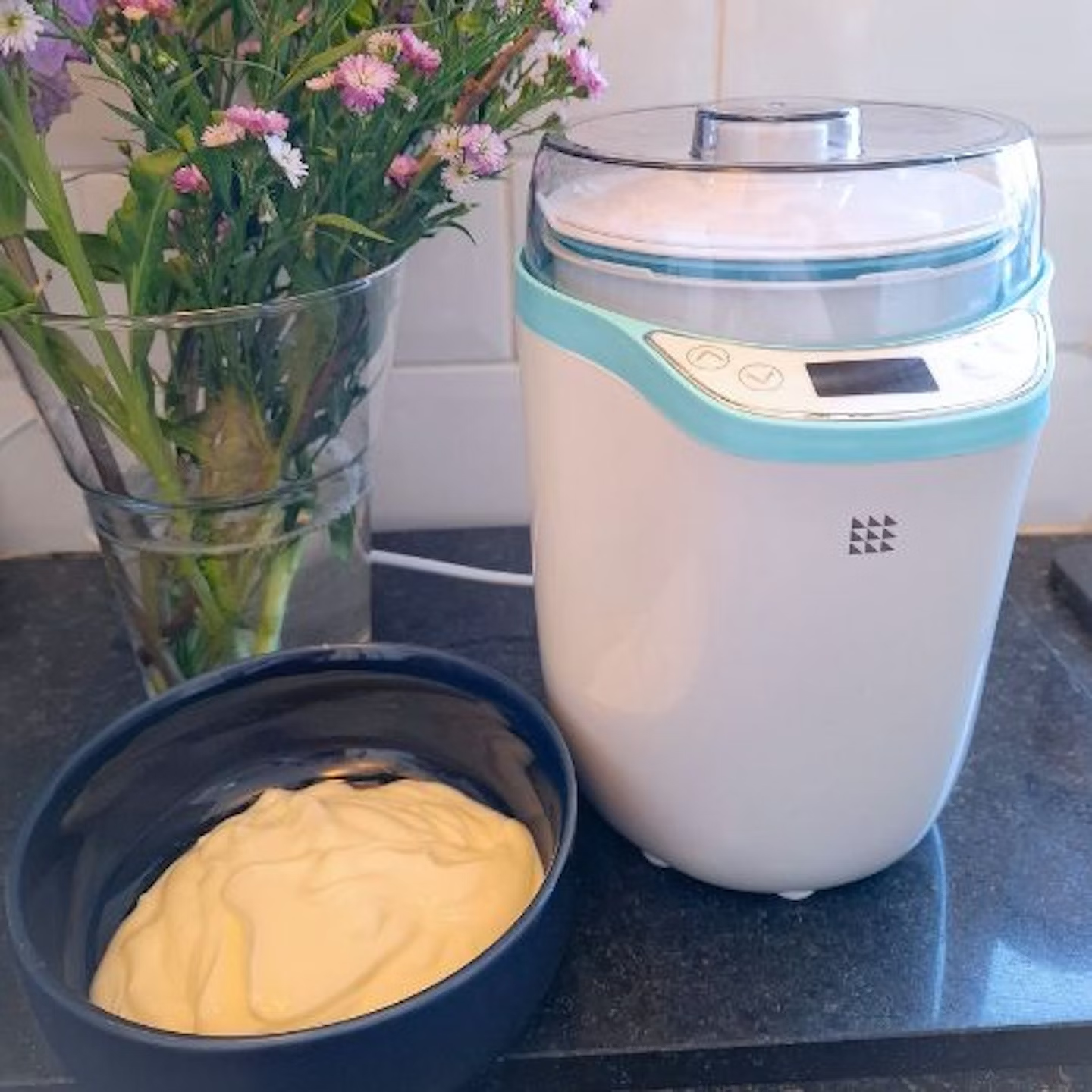
| Feature | Thermophilic Culture | Mesophilic Culture |
|---|---|---|
| Ideal Temperature | Warm: 110-115°F (43-46°C) | Room Temp: 70-77°F (21-25°C) |
| Incubation Time | Faster: Typically 5-12 hours | Slower: Typically 12-24 hours |
| Flavor Profile | Tangy, robust, classic “yogurt” flavor | Mild, buttermilk-like, less acidic |
| Texture | Thick, custardy, firm-set | Thinner, pourable, sometimes viscous or “ropey” |
| Common Yogurts | Greek, Bulgarian, Standard Plain Yogurt | Filmjölk, Viili, Matsoni, Piimä |
| Equipment | Yogurt maker is highly recommended for consistency | Can be made on a countertop; no special machine needed |
| Perpetuation | Can be re-cultured a few times before weakening | “Heirloom” – can be re-cultured indefinitely if cared for |
|
Our Picks for the Best Yogurt Maker in 2025
As an Amazon Associate, we earn from qualifying purchases.
|
||
| Num | Product | Action |
|---|---|---|
| 1 | Ultimate Probiotic Yogurt Maker with Adjustable Temperature & Time Control - Make Trillions of Live Probiotics & Get Better Gut Health - ULTIMATE LIFETIME WARRANTY - Wellness Gifts for Men & Women |

|
| 2 | Ultimate Yogurt Jars - Make More Delicious Yogurt! 8 Count Small Glass Yogurt Cups With Lids - 100% BPA Free, Airtight & Dishwasher Safe! Perfect Containers for Yoghurt, Oatmeal, Pudding, or Jello |
|
| 3 | DASH My Mug Ice Cream Maker Machine (Aqua): Multi-Purpose Soft Serve Ice Cream Machine with (2) Bowls for Homemade Gelato, Sorbet, Frozen Yogurt, Built-In Ingredient Chute, Easy to Clean and Store |
|
| 4 | Suteck Yogurt Maker - Stainless Steel Yogurt Makers with Adjustable Time & Temp Control,Automatic Shut-Off & Constant Temper for Homemade Greek, Probiotic Yogurt, BPA-Free 8 Glass Jars (48 oz) |
|
| 5 | Suteck Yogurt Maker with 8 Glass Jars, Time & Temp Adjustable Control Yogurt Machine, Homemade Greek & Probiotic Yogurt, Automatic Shut-Off, BPA-Free, 48 oz Total, |
|
| 6 | Ultimate Probiotic Yogurt Maker with Adjustable Temperature & Time Control - Make Trillions of Live Probiotics & Get Better Gut Health - ULTIMATE LIFETIME WARRANTY - Wellness Gifts for Men & Women |
|
| 7 | Euro Cuisine YM360 Yogurt Maker with Adjustable Time & Temperature Control - 2-Quart Glass Jar, FREE Thermometer & Cotton Strainer Bag, 2025 Edition, Black, Make Yummy Organic Probiotic Yogurt at Home |
|
| 8 | Yogurt Maker, Automatic Digital Yoghurt Maker Machine with 5 Glass Jars 42 Ozs, with Constant Temperature Control for Home Organic Yogurt, Cheese, Fruit Wine (with 5 Cups) |
|
| 9 | Yogurt Maker, Automatic Digital Yoghurt Maker Machine with 5 Glass Jars 42 Ozs, with Constant Temperature Control for Home Organic Yogurt, Cheese, Fruit Wine (No Cups) |
|
| 10 | Bear Yogurt Maker, Greek Yogurt Maker Machine with Strainer and Timer Control, Stainless Steel Inner Pot, Automatic Digital with 2 Glass Jars 1 Quart for Home Organic Yogurt, Cheese, Fruit Wine |
|
How Does This Choice Affect My Yogurt Making Journey?
Understanding the thermophilic vs mesophilic culture difference is fundamental because it dictates your entire process—from equipment to timing to the final product.
Most people starting out with a new [yogurt maker from our guide]() will be using thermophilic cultures. These machines are designed to be perfect little heat chambers. Key features to look for, like an adjustable timer and precise temperature control, are built specifically to cater to the needs of these heat-loving bacteria.
Can I Use a Mesophilic Culture in a Standard Yogurt Maker?
That’s a fantastic question. The answer is: maybe. If your yogurt maker has a very low-temperature setting or a “custom” function that can hold temps in the 70s, then absolutely. However, most standard models don’t go that low. In that case, you can still use the yogurt maker’s insulated body (while it’s turned off) and containers to help shield your mesophilic culture from drastic room temperature swings, but you won’t be plugging it in.
A Quick Checklist for Choosing Your Culture
Still on the fence? Run through this quick checklist to find your perfect match.
- [ ] Craving thick, spoonable Greek-style yogurt? -> Go Thermophilic.
- [ ] Prefer a milder, drinkable, or smoothie-style yogurt? -> Try Mesophilic.
- [ ] Do you own and love using a yogurt maker? -> Thermophilic cultures are your machine’s best friend.
- [ ] Want a low-fuss option that doesn’t require extra appliances? -> Mesophilic is your go-to.
- [ ] Is your kitchen often cool or drafty? -> A Thermophilic culture in a yogurt maker will give you reliable results.
- [ ] Do you love experimenting with unique, global flavors? -> Explore the world of Mesophilic heirloom cultures.
As food microbiologist Dr. Eleanor Vance puts it, “The diversity of bacteria in homemade yogurts, especially when exploring both thermophilic and mesophilic varieties, can be a fantastic way to introduce a wider range of probiotics into your diet. Each type offers a unique microbial footprint, contributing differently to gut health.”
Frequently Asked Questions (FAQ)
Can I use a thermophilic yogurt (like store-bought Greek) as a starter for a mesophilic batch?
No, this won’t work. The bacteria strains are completely different and require different temperature ranges to activate and ferment the milk properly. You must use the right type of starter for the yogurt you want to make.
What happens if I use the wrong temperature for my culture?
If you incubate a thermophilic culture at room temperature, it will likely fail to ferment or will do so very slowly and poorly, risking spoilage. If you incubate a mesophilic culture at high heat, you will kill the beneficial bacteria, and the milk will not turn into yogurt.
Where can I buy different yogurt starter cultures?
You can find them at health food stores, specialty cheese-making or brewing shops, and from many online retailers. They are typically sold as small freeze-dried packets. For your first thermophilic batch, you can even use a few tablespoons of a high-quality, plain, store-bought yogurt that lists “live and active cultures” on the label.
How do I know if my yogurt culture is still active and working?
The proof is in the pudding… or the yogurt! If your milk successfully thickens and develops a tangy aroma within the recommended time frame, your culture is active. If after 12 hours (for thermo) or 24 hours (for meso) the milk is still completely liquid, the culture was likely no longer viable.
Is a thermophilic or mesophilic culture healthier?
Both types of cultures are packed with beneficial probiotics. Neither is inherently “healthier” than the other; they just contain different strains of bacteria. The healthiest choice is the homemade yogurt you’ll enjoy eating regularly, free from the added sugars and preservatives found in many commercial brands.
Your Yogurt Adventure Awaits
Navigating the world of homemade yogurt is a rewarding journey, and now you hold the map. The choice between a thermophilic vs mesophilic culture is no longer a mystery, but a conscious decision that puts you in complete control of your final product. Whether you’re using your trusty yogurt maker to whip up a batch of thick, tangy Greek yogurt or leaving a jar of Filmjölk to work its magic on the counter, you’re participating in a delicious, age-old tradition. So go ahead, pick your culture, and start creating the perfect yogurt for you.